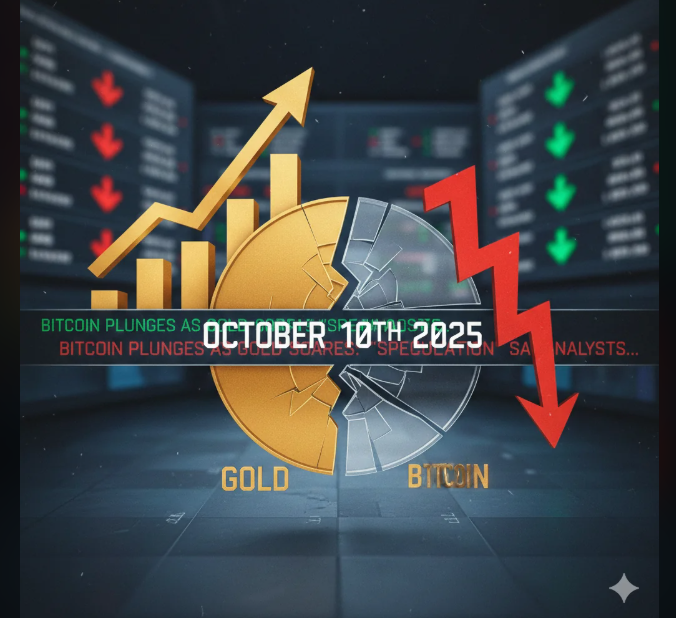
he popular belief that Bitcoin (BTC) functions as “digital gold” and serves as a reliable store of value has proven to be more myth than reality. Over the past 12 months, gold surged approximately 70% to over $5,100 per ounce, while BTC fell more than 30% from a high of $126,000, dipping below $60,000 in early February.
Bitcoin's Digital Gold Narrative Has Failed
Aleisha Lee • February 24, 2026

Aleisha Lee, CPA, Licensed Real Estate Agent (Queensland)
24 February 2026 < 4 minutes read

Although BTC shares certain characteristics with gold —
scarcity, high mining costs, and difficult to replicate, recent price action and its strong correlation to tech equities (0.8 to the Nasdaq and 0.73 to the iShares Expanded Tech Software ETF, IGV) show that BTC behaves like a high-risk tech stock rather than a “flight to safety". The macro forces powering gold to record highs simply aren't driving BTC, creating a clear divergence in performance.
Source: The Bitcoin Magazine
BTC Fails the Institutional Monetary Function
BTC is not recognised by major central banks as a reserve or collateral asset in the same way as gold or sovereign bonds. Central banks hold gold as part of foreign exchange reserves because it is highly liquid, globally recognised, and free from counterparty risk, making it a dependable store of value during crises.
In periods of stress, foreign central banks can access $USD liquidity through
swap line agreements with the Federal Reserve, with both parties agreeing to reverse the transaction at predetermined exchange rates, minimising credit and exchange rate
risk.
Gold can also be
mobilised, sold, or
used as collateral, functioning as monetary insurance that preserves liquidity and confidence during extreme economic or geopolitical events.
Bitcoin, by contrast, is
not recognised as a reserve asset, is excluded from central bank liquidity facilities, and does not serve as collateral in sovereign funding markets, offering no equivalent institutional utility.
Source: CNBC
BTC Fails the Sovereign Reserve Function
Non-OECD central banks—including China, India, Turkey, and Poland—have
increased
gold
purchases to
diversify away from $USD, hedge against inflation, and protect against geopolitical risks, particularly following the freezing of Russian assets by Western powers in 2022. These same institutions are not adding BTCs to their primary reserves. This demonstrates that BTC fails the sovereign reserve function:
it cannot provide crisis liquidity, act as collateral in monetary operations, or serve as a trusted hedge against geopolitical and financial instability.
European and other central banks have formally rejected BTC as a reserve asset. The European Central Bank, National Bank of Poland, Swiss National Bank, and Hungarian Central Bank have all rejected BTC in their official reserves. Meanwhile, China, pursuing “gold supremacy” to build a U.S. dollar alternative, has added over 1,080 tons of gold since mid-2022—potentially lifting its reserves to an estimated 5,500 tons, second only to the U.S, while its 194,000 BTC holdings are largely historical seizure assets.
Recently, China has banned cryptocurrency trading for its 1.4 billion population to maintain financial control and preserve ‘common prosperity’ under the Communist regime. The position adopted by central banks globally
reinforces the view that BTC cannot be relied upon to maintain sovereign monetary stability, provide crisis liquidity, or function as a dependable strategic reserve asset.
Source: Cryptonews.net
BTC's Concentrated Ownership Has Failed the Global Neutrality Test
BTC’s ownership is heavily concentrated in the United States rather than being globally distributed. Of the top 20 holders, 18 are U.S.-based entities, and Michael Saylor’s Strategy (NASDAQ:MSTR) alone controls roughly 717,131 BTC, or 3.4% of the total supply.
U.S. spot ETFs and institutional investors hold an additional 12% of circulating BTCs. This concentration exposes BTC’s price and stability to U.S. domestic conditions, policies, and market sentiment, making it extremely vulnerable to geopolitical or financial shocks. In contrast, gold’s distributed global ownership allows it to act as a neutral and reliable crisis hedge.
BTC Fails the Permanence and Security Test
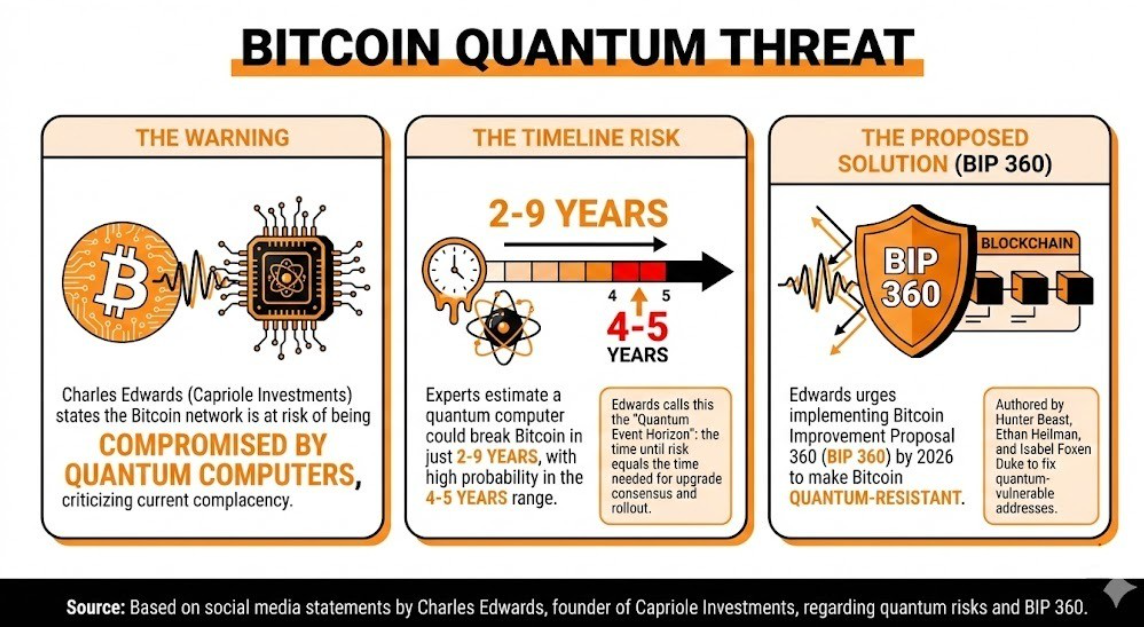
BTC’s security and scarcity are increasingly threatened by long-term risks such as quantum computing. Dormant BTCs, which estimated at over 7 million coins, including Satoshi Nakamoto's 1 million coins, could potentially be accessed by future quantum attacks, creating the risk of sudden supply shocks that undermine the coin’s fixed-supply narrative. Gold, in contrast, benefits from a 6,000-year trust premium, while BTC’s 17-year history leaves institutional investors questioning its reliability as a permanent, risk-free store of value. These vulnerabilities erode BTC’s claim to function as a stable, long-term hedge or digital equivalent of gold.
Key Takeaways
Recent price movements clearly illustrate gold’s resilience and BTC’s failure as a hedge. While gold has rallied through macroeconomic and geopolitical headwinds — tariffs, the Iran conflict, government shutdowns, and currency crises, Bitcoin has largely moved in tandem with risk assets, failing to protect investors during turmoil.
For BTC to reclaim the digital gold status, it must begin to behave like a true hedge in times of stress. Until then, gold remains the enduring safe-haven, while BTC’s “digital gold” narrative remains a fairytale for investors.
Disclaimer
This article is for general informational purposes only. I give no warranty and accept no responsibility or liability for the accuracy or the completeness of the information and materials contained in this article and on this website. Under no circumstances will I be held responsible or liable in any way for any claims, damages, losses, expenses, costs or liabilities whatsoever (including, without limitation, any direct or indirect damages for loss of profits, business interruption or loss of information) resulting or arising directly or indirectly from your use of or inability to use this website or any websites linked to it, or from your reliance on the information and material in this article and on this website. NOTHING ON THIS WEBSITE IS FINANCIAL ADVICE.

While Wall Street was busy hitting records, the other Great Wall Street was quietly doing the same. What the Biggest Capital Rotation of 2026 Means For Global Markets and Digital Assets.
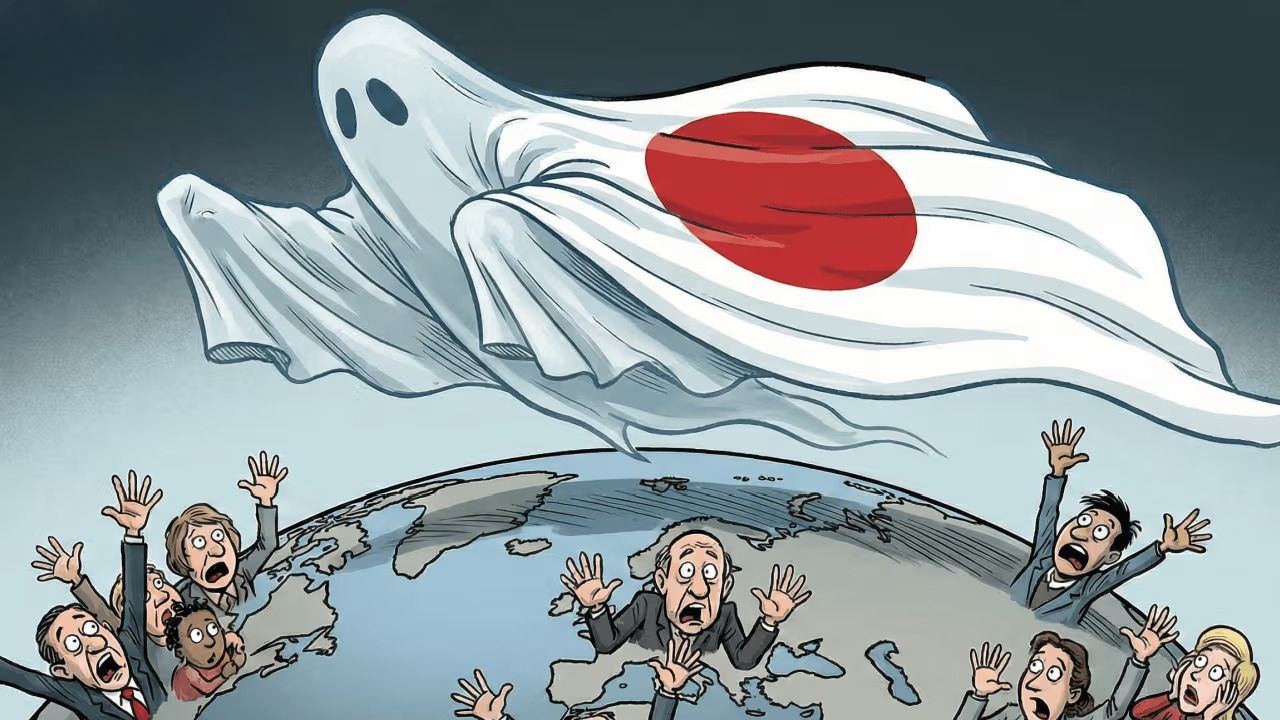
While global markets fixate on the Strait of Hormuz and the Fed, one of the most consequential financial events of 2026 is quietly building in Tokyo. BOJ is actively transitioning away from decades of ultra-loose monetary policy and the ripple effects are already being felt across global financial markets.

As Hash Ribbon Indicator at a crossover and $BTC hovering in the deep value zone, is market aligning for a new phase of accumulation?
The imminent approval of Solana Spot ETFs will mark a major disruption in traditional markets. Setting the next crypto frontier, Solana is not just another token, it's ultra-fast, super cost effective and developer-friendly blockchain that powers a vast and growing ecosystem of real-world applications. From DeFi and tokenised payments to NFT platforms and Web3 gaming, Solana offers unmatched scalability and speed that rival traditional financial systems can't beat. Now its inclusion in ETF offerings signals a shift in regulatory momentum and investor appetite. Read on....

Desires are strong and dream last long. Mass-market brands sell us reality, whilst luxury brands have the incredible ability to sell us dreams. Through compelling storytelling, these brands ignite our immediate desires to imitate an ideal world that’s exclusive, successful, glamorous and prestigious which ultimately translates into our willingness to pay a premium for their products. Read on to find out the rationale behind this price phenomenon in the world of luxury.

Known for bear hugs, affection, smiles, and wisdom, grandparents are special. They tell the best stories, have the answers to everything, not to mention the candy treats. How can we embrace the power of AI technology to make sure that our Nan and Pop age happily in their golden years?

In the last few months, it has been near impossible to exist on the internet without noticing NFTs, the technology dominating the world of collectibles, art and gaming. In this month's post, I will bring you to the crazy, wild and expensive world of NFTs where millions and millions of dollars worth of NFTs have changed hands, but nothing makes any sense. In the relatively short history of the crypto world, from the ICO boom in 2017, the smart contract platform era in 2018, Stablecoin in 2019, DeFi craze in 2020, in 2021, the torch has passed on to NFTs. Is NFTs another 'Tulip Mania' - an enormous bubble waiting to pop? Is it just another crypto wave that just comes and goes, or is it a paradigm shift that is incredible and inevitable?

Are diamonds just 'girl's best friend'? This post explores the world of men's jewellery, from the lavish splendour in the Renaissance era and heavy metal in the world of rock 'n' roll to modern day fashion statement, an expression of style that embraces androgyny and individuality. The moment you say ‘men’s jewellery’, it’s not unusual to think high-wattage gold chains and enormous rings encrusted with too much diamonds that rappers wear.

Explore how the coronavirus pandemic has shaken up and transformed the billion-dollar industry. Gone are the days when international university students and Chinese aunties with hessian shopping trollies sweeping baby formulas off the shelves while frantically WeChatting their buyers in China to finalise the transaction, choking up almost every Chemist Warehouse store, making parents furious over baby formula shortages. Desperate mums like myself had to scour pharmacies, supermarkets, Kmart, Big W, eBay, Amazon, you name it, for a tin of organic infant formula for my baby boy. It was an ongoing struggle until the coronavirus pandemic hit our shores and government closing the border to all international travellers. Overnight, it upended inbound tourism and disrupted the entire Daigou ecosystem and the logistics network.